In defending His divinity to fiercely religious opponents, Jesus quoted a statement in Psalm 82 that includes the assertion, “You are gods!” (John 10:34) Many New Agers reference that scripture, insisting that Jesus was affirming the divinity of all human beings. But is that what the Savior meant? Some sincere Christians also use this passage to assign a deity-like status for the born-again sons and daughters of God—not only in the world to come, but in this world—right here, right now.
In both religious mindsets, misinterpretations and error are inevitable because the historical roots of this statement are usually overlooked. However, when scrutinized within the framework of the surrounding text and its Old Testament foundation, this unique New Testament passage communicates something quite different.
Let’s dig deeper and get to the truth.
The Incendiary Incident
Here’s the biblical account of what fueled the caustic confrontation between Jesus and the Jews who questioned His claims:
Now it was the Feast of Dedication in Jerusalem, and it was winter.
And Jesus walked in the temple, in Solomon’s porch.
Then the Jews surrounded Him and said to Him, “How long do You keep us in doubt? If You are the Christ, tell us plainly.”
Jesus answered them, “I told you, and you do not believe. The works that I do in My Father’s name, they bear witness of Me.
But you do not believe, because you are not of My sheep, as I said to you.
My sheep hear My voice, and I know them, and they follow Me.
And I give them eternal life, and they shall never perish; neither shall anyone snatch them out of My hand.
My Father, who has given them to Me, is greater than all; and no one is able to snatch them out of My Father’s hand.
I and My Father are one.” (John 10:22-30)
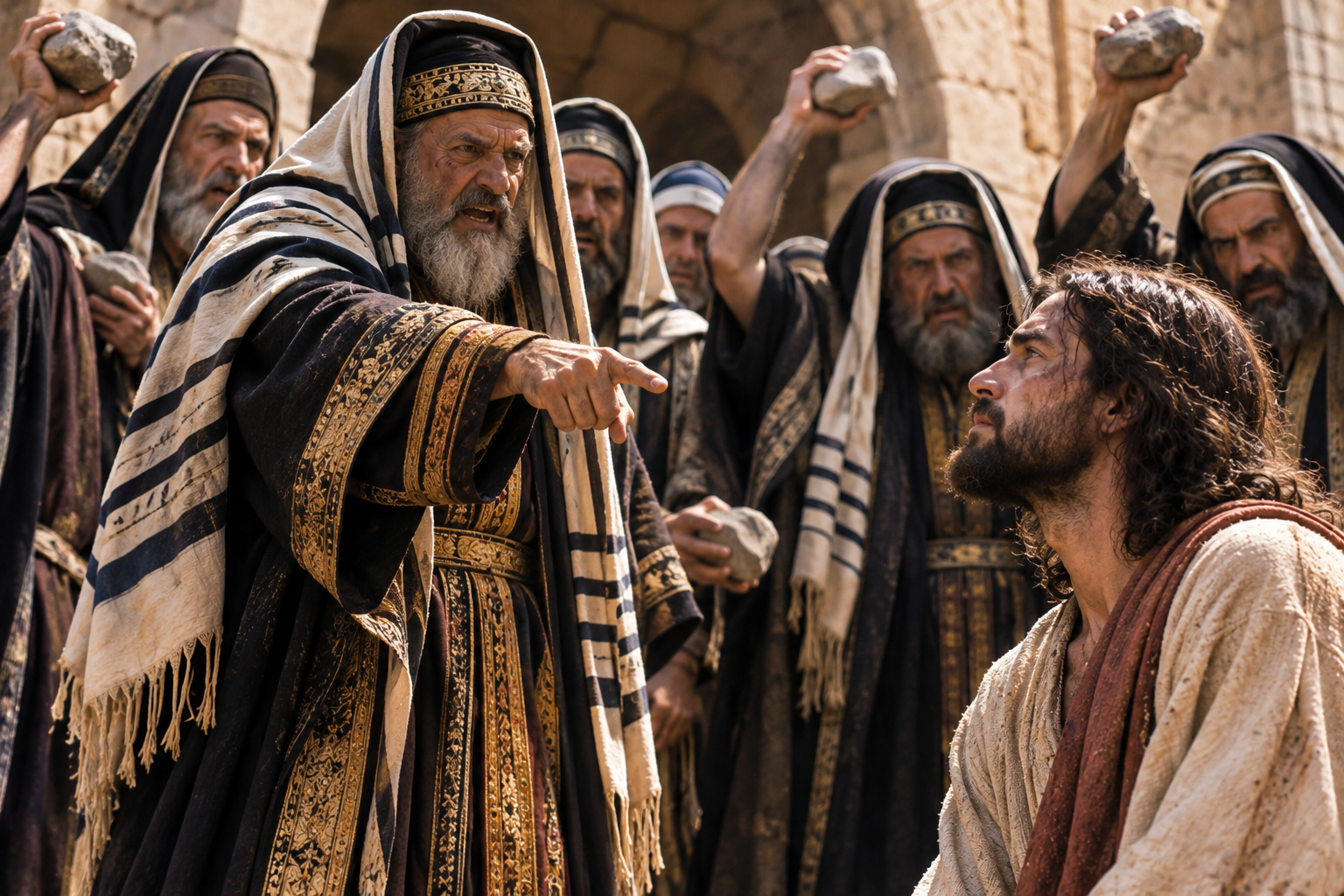
That last assertion—Jesus’ declaration of oneness with the Father—was too much for the angry crowd who already disbelieved His words. As they hastily gathered stones to execute Him, He asked:
“Many good works I have shown you from My Father. For which of those works do you stone Me?”
Boiling over with resistance, they responded:
“For a good work we do not stone You, but for blasphemy, and because You, being a Man, make Yourself God.”
Jesus (Yeshua) then countered their accusation by referencing a curious Old Testament passage:
“Is it not written in your law, ‘I said, You are gods? ‘
If He called them gods, to whom the word of God came (and the Scripture cannot be broken),
Do you say of Him whom the Father sanctified and sent into the world, ‘You are blaspheming,’ because I said, ‘I am the Son of God’?
If I do not do the works of My Father, do not believe Me;
But if I do, though you do not believe Me, believe the works, that you may know and believe that the Father is in Me, and I in Him.”
(John 10:34–38)
To Whom Was Jesus Referring?
Who were these persons Jesus referred to as “gods?” The first step in deciphering this mystery is to go to Psalm 82. After you read it, I will explain:
God stands in the congregation of the mighty; He judges among the gods.
How long will you judge unjustly, and show partiality to the wicked? Selah
Defend the poor and fatherless; do justice to the afflicted and needy.
Deliver the poor and needy; free them from the hand of the wicked.
They do not know, nor do they understand; they walk about in darkness; all the foundations of the earth are unstable.
I said, “You are gods, and all of you are children of the Most High.
But you shall die like men, and fall like one of the princes.”
Arise, O God, judge the earth; for You shall inherit all nations.
Answers from the Original Hebrew
The Hebrew word translated “gods” in this psalm is elohiym. Over 2,000 times elohiym is translated “God” in the Old Testament. Over 200 times it is translated into the plural word “gods,” including this passage from Psalms. But who are these “gods” being referenced? Is it some group of celestial deities? No, absolutely not! They are men: a certain unique group of men: the judges of Israel.
This leads to the second step in deciphering this mystery.
Now, we must travel all the way back to Exodus. In that second book of the Bible, four times elohiym is translated into the word “judges” in the King James, the New King James and many other English versions of the Bible. (Exodus 21:6; 22:8–9) However, the original Hebrew word literally means “God” or “gods.” Aha! The key that opens the door of understanding. It was the judges of Israel who were called elohiym and in the vocabulary of Israelites, that meant “gods.”
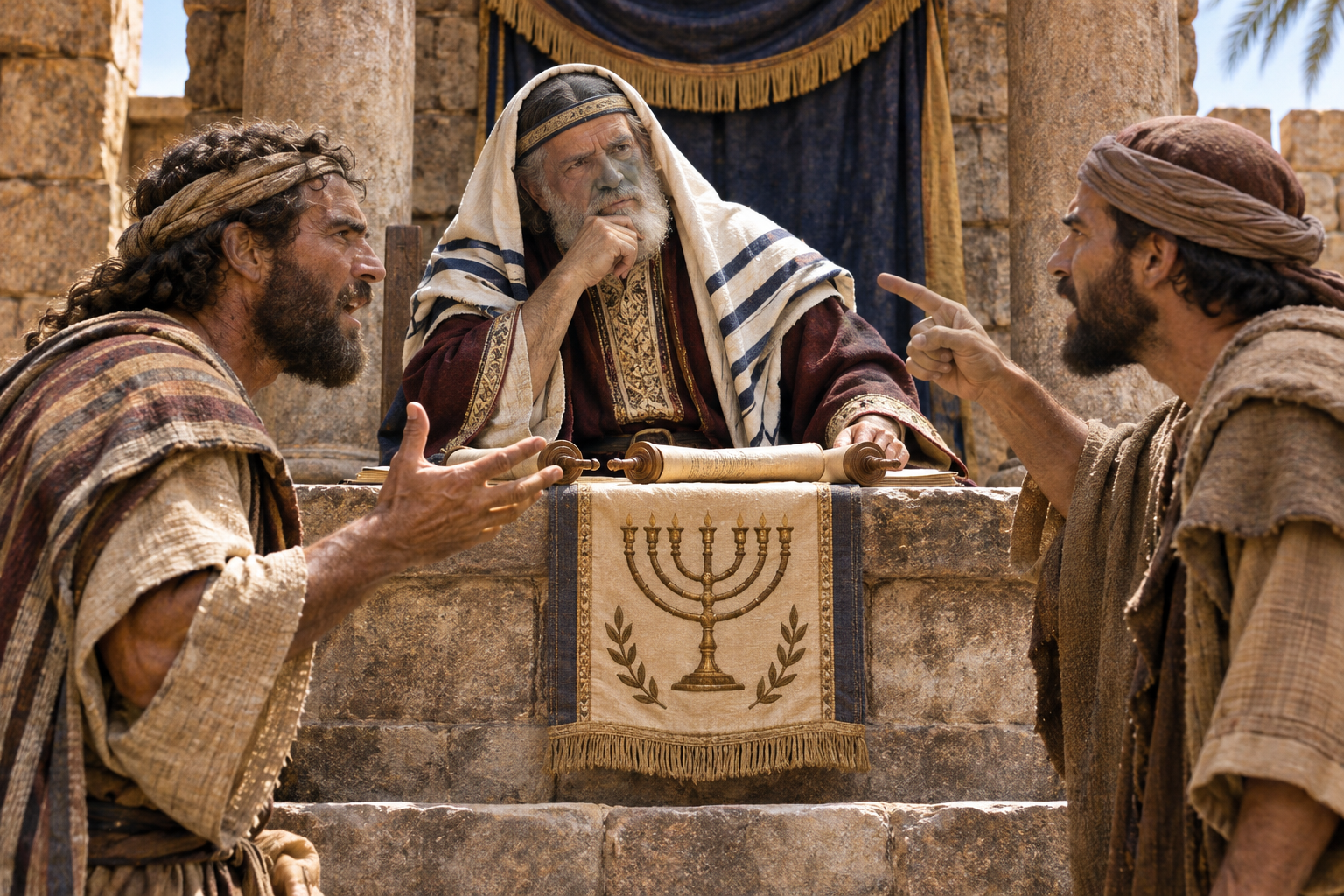
Presumably, the Most High referred to his representative judges in Israel as elohiym, because if they did their job correctly, they spoke with divine authority. The “word of God” came to them supernaturally (words of wisdom and words of knowledge). The God of Israel inspired their judgments, through His Word and by His Spirit. As mouthpieces of the Almighty, they would make pronouncements that aligned with the Word of God (the Torah) and represented the will of God in any case brought to their attention (His living Word). Because God Himself was judging His people among them and through them, His representatives were given this honorific title.
Eventually, though, many of the judges of Israel became corrupt: receiving bribes, making false judgments, abusing their authority, and perpetrating many injustices. Because they were greedy and out of touch with God, they often misrepresented Him and in doing so, damaged God’s people. In the Psalm 82 passage Jesus referenced, God was reminding the judges that He was among them in a supernatural sense and they were only His spokespersons:
God stands in the congregation of the mighty; He judges among the gods.
Then He protested their ungodly and unacceptable behavior, saying:
“How long will you judge unjustly, and show partiality to the wicked? Selah. Defend the poor and fatherless; do justice to the afflicted and needy.” (Ps. 82:2–3)
God was reminding these judges (“the gods,” Heb. elohiym) that he was invisibly in their midst, ready to reveal his determinations concerning any situations brought to their attention. But they were deaf to his counsel. They had their own agenda. Too often, they were self-centered, manipulative, selfish, and spiritually insensitive. So, God gave them a stern warning:
I said, “You are gods…but you shall die like men.” (Ps. 82:6–7)
So clearly, this passage reveals the humanity of the judges of Israel, not their divinity. It declares their mortality—not their exalted godlike status. God warned that they may think of themselves with bloated descriptive terms, but the stalker of the whole human race (death) will eventually snare them like any common person.
So, the correct interpretation of this portion of Scripture is absolutely the opposite of what some construe it to mean. Unquestionably, it cannot be used as proof by those who embrace New Age spirituality that all men are evolving into ‘godhood,’ neither is this destiny being implied for those who are born again and filled with God’s Spirit. The Author of the Bible never intended these passages to convey this meaning.
Having made my case, I still understand the perspective of those who have claimed this entitlement of “gods” for born-again believers in this New Covenant era. Some of their logic is based on ideas like the following:
- Horses beget horses, dogs beget dogs, so if God has offspring, what are they? You fill in the blanks: God begets _______.
- Christians have been made “partakers of the divine nature” by the “exceedingly great and precious promises of God” (2 Peter 1:4).
- God’s “seed” is within us (the Greek word is sperma, from which we get the English word sperm), so symbolically and spiritually, the very DNA of God is a part of us. We are infused with His nature, His character. As new creations in Christ we have become the very “righteousness of God” (1 John 3:9, 2 Corinthians 5:21).
- If we walk in the Spirit, the Word of God comes to us, just like it came to the “judges” (the elohiym) of ancient times. True disciples (His sheep) hear Jesus’ voice (John 10:27). That’s undeniable. Sometimes, we receive flashes of insight supernaturally: the word of knowledge or the word of wisdom as we walk with God day-by-day, in order to help other people (1 Corinthians 12:8).
- God’s Spirit-filled people are called to speak as “oracles of God” (voices of God in the world, His anointed representatives) (1 Peter 4:11).
- God’s saints are authorized to judge civil, social and religious matters in the church and will one day judge the world and judge angels (under the authority and inspiration of the Judge of all) (1 Corinthians 6:1-6). So, we fill a role that is similar to the Israelite judges of ancient times, but even more perfected and exalted.
- We possess a oneness with the Father similar to, but certainly not equal to, the oneness with the Father Jesus possessed. The apostle John revealed “of His fullness we all have received” (John 1:16). Moreover, Jesus Himself prayed for all His true followers, “Father . . . the glory which You gave Me I have given them, that they may be one just as We are one” (John 17:22). Someday, we will enjoy that union to the highest degree in spectacular ways beyond what we could conceive of now.
- When Jesus returns, we will be changed in a moment, glorified, and become like the firstborn Son, shining like the sun in the kingdom of our Father.
- We will inherit all things and be pillars in the temple of God forever, kings and priests reigning with Him forever over the New Creation.
Surely, considering all these incredible and verifiable truths, wouldn’t those who are born again and filled with the Spirit have an even greater right to claim the status of being “elohiym” (gods) according to John 10:34 and the supportive passages just quoted? Please read my answer closely:
Only if we stretch those words beyond their original intended meaning.
There is absolutely no scripture to be found that unquestionably confers the title of “gods” (elohiym) on the sons and daughters of God. So, we should never take it upon ourselves to lay claim to such a fantastical endowment.
However, it should also be emphasized, Bible teachers who feel believers have a right to this status (based on observations like the bulleted statements above) should not be lambasted as heretics for thinking it is acceptable. Most likely, they are sincere believers who truly love God and love His Word and are trying to interpret it correctly.
Even though, in my estimation, proper exegesis of these passages do not allow this exact conclusion, we need to understand the perspective of those who dare to use such terminology for God’s offspring. I have never heard any Christian claim “godhood” in the sense of being worshipped or as being equal to the Messiah (as New Agers would). They are just celebrating the enormity of what God has done for His people in making us His temple, His heirs, and His everlasting family.
So, what are my conclusions?
- First, I will be careful to share with New Agers the correct revelation of this passage and make it clear Jesus never implied the “godhood” of all people.
- Second, I will never claim this title for myself or for other followers of Jesus. If we just fulfill the mandate to be obedient servants to the King of kings and sincere and faithful sons and daughters of God, we have accomplished great things and should be happy beyond measure.
- Third, I will not demonize those who do claim this title for the members of the body of Christ. I may not agree with them, but in most, if not all cases, I understand where they are coming from.