

By guest writer, Jim Collins
The idea of “positive thinking” grew out of the New Thought Movement. New Thought explicitly teaches the power of mind, positive thinking, and mental causation. The most influential promoters in the early 1900s were Napoleon Hill, Ernest Holmes, and Emmet Fox. Positive thinking was popularized in the mid-1900s by Norman Vincent Peale with his book, The Power of Positive Thinking (1952). Later positive thinking gurus (late 1900s-today) include numerous other people and movements – too many to name here.

Positive thinking first became associated with a formal religion around 1889 when Charles and Myrtle Fillmore started the Unity Church. This “positive thinking religion” became a movement within the new thought philosophy. The main ideas within new thought and unity include positive thinking, affirmative prayers, and mind-body healing.
Simply put, positive thinking is the ability to think positive thoughts long enough to manifest desirable outcomes in one’s life, including mental and physical healing as well as financial and relational success. This new thought concept is sometimes referred to as “The Law of Attraction” and was popularized in a book by Rhonda Byrne called The Secret (2006). As revealed in her book, the secret you need to know and use is “The Law of Attraction.” Here is the concept presented throughout her book: “Whatever you think about (positive or negative) will be attracted into your life.”
The challenge with the Law of Attraction concept is that human beings created in God’s image and likeness were never created to rely solely on their own mental willpower (positive thinking) to succeed in life. Mankind (men and women) was created by God to live the way God created them to live. Every human being is part of God’s workmanship, designed to live according to God’s purposes (Ephesians 2:10).
Perhaps the biggest difference between positive thinking and biblical faith is that positive thinking embraces a secular humanist worldview, while faith in God’s Word embraces a biblical worldview. A biblical worldview accepts God’s Word (the truth found in the Holy Bible) as the source of truth for one’s life, while a secular humanist worldview rejects God’s Word (the truth found in the Holy Bible) as the source of truth for one’s life.
Positive thinking is what secular humanists use to try and be more successful. In her book, The Secret, Rhonda Byrne and her faculty state that what you think about most will be attracted to you. This practice is mere positive thinking.
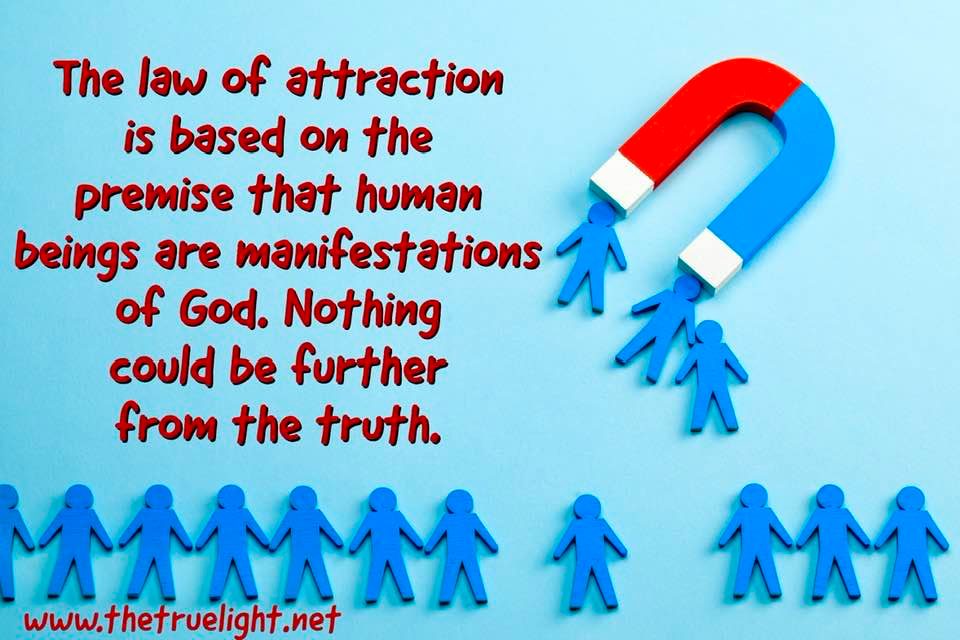 Then Rhonda and her faculty make a radical, but false statement in The Secret on page 164. The statement is: “You are God…” Then on page 183, she makes this statement: “You are the master of the Universe.” Secular humanists do have faith, and they exercise it regularly through positive thinking. Their faith is in the god of self – You! Their mantra is: “You are God.” Unfortunately, no matter how confident you may become and no matter how positive you may think, you are not the master of the Universe and you are not God.
Secular humanism implies that you are God because it rejects the existence of the God of the Bible. Therefore, by default, secular humanists set themselves up as gods of their own world.
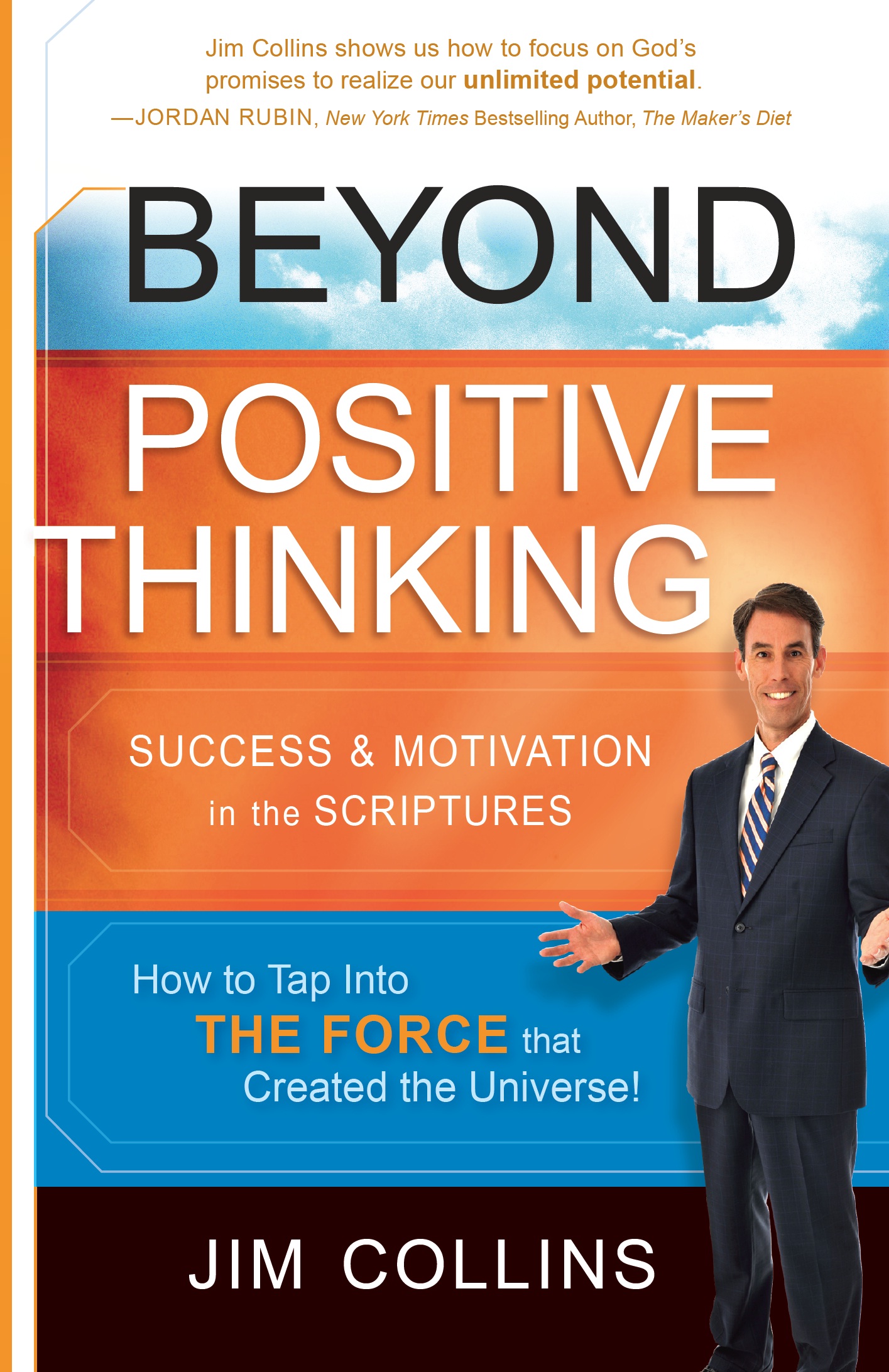
Many times, when people see the cover of my book, Beyond Positive Thinking: Success and Motivation in the Scriptures, they prejudge it as just another positive thinking, motivational book. However, it’s called Beyond Positive Thinking because it connects God’s Word (the truth found in the Holy Bible) to your success in life, both this life and the everlasting life to come (See John 3:15-16).
The main difference between positive thinking and biblical faith is the truth of God’s Word (Psalm 119:160; John 17:17; 1 Thessalonians 2:13; 2 Timothy 2:15; James 1:18).
The biblical concept of positive thinking is called “faith,” specifically, faith in God’s Word. The difference is that positive thinking is limited by the abilities of the individual, but faith in God’s Word has no limits because God has no limits. The best way to illustrate this is to contrast positive thinking and faith.
Here is the first statement of contrast:
Positive thinking attempts to use your own power or some “higher power” to fulfill your own personal agenda. Faith relies on God’s power enabling us to live according to God’s will.
God’s power is manifested as the ability, strength, and wisdom of God. This is confirmed by Jesus in Acts 1:8 (AMPC), “But you shall receive power (ability, efficiency, and might) when the Holy Spirit has come upon you, and you shall be My witnesses in Jerusalem and all Judea and Samaria and to the ends (the very bounds) of the earth.”
Notice the words: “power, ability, efficiency, and might.” Efficiency refers to wisdom and might refers to strength. Jesus is saying that the Holy Spirit is going to manifest the power, ability, wisdom, and strength of God in your life. The Holy Spirit will manifest the wisdom and ability you need to do what God has called you to do (be an effective witness for Christ). The Holy Spirit will manifest the wisdom and ability you need to fulfill your God-given purpose. Therefore, here is an affirmation based on God’s Word: “I have the wisdom to know what to do and the ability to know how to do it.”
Here is the next statement of contrast:
Positive thinking is filled with pride due to personal manipulation of the spiritual realm. Faith is filled with humility due to the recognition that your power comes from God.
God’s power is manifested as the strength and favor of God. This is confirmed in Psalm 89:17 (NLT-1996), “You are their glorious strength. Our power is based on your favor.” Notice the last phrase, “Our power is based on your favor.” This power comes from God and is to be used for His purposes. Therefore, here is an affirmation based on God’s Word: “My power is based on God’s favor, and God’s favor is upon me to receive.”
Here are the next two statements of contrast:
Positive thinking is all about your agenda and you manipulating your environment. Faith is all about God’s agenda and allowing God to fulfill His will and purpose for your life.
Positive thinking is all about yourself and what you can get. Faith is all about God and what He can do through you.
These two statements contrast the kingdom of the world and the Kingdom of God. There are two philosophies whereby people govern their lives. One is the sole pursuit of kingdom of the world based on the lust of the flesh, the lust of the eyes, and the pride of life (1 John 2:16). The other is the Kingdom of God, which is based on God, Jesus, and biblical truth. Many times, the desired outcome of positive thinking is limited to worldly success. Success may be the primary objective in the kingdom of the world, but faithfulness should be the primary objective in the Kingdom of God (Luke 16:10-12; 1 Corinthians 4:2; Galatians 5:22; 1 John 2:15-17). Your faithfulness in this life will be rewarded at the Judgment Seat of Christ (2 Corinthians 5:9-10).
Here is the next statement of contrast:
Positive thinking hopes to possess the objects of its thoughts. Faith possesses the rights, privileges, and benefits that God has already provided through Jesus Christ.
This is commonly referred to as the finished work of Christ. The finished work of Christ says that everything you need for the rest of your life has already been provided through the death, burial, and resurrection of Jesus Christ (Matthew 6:25-34; 2 Corinthians 1:20; Philippians 4:11-13; Hebrews 1:1-3). Remember, as a born-again, child of God, you have a new identity because you are in Christ (John 1:12-13, John 3:1-7, 2 Corinthians 5:17).
Now, your objective is to reinforce your new identity in Christ so you can live the way God created you to live. You can do this by meditating on, speaking aloud, and putting into practice in your life – the “in Him” Scriptures. There are over 100 “in Him” Scriptures in the New Testament alone. You can find a complete list at: www.beyondpositivethinking.org.
Here is the next statement of contrast:
Positive thinking attempts to attain happiness as a result of thinking positive thoughts. Faith provides joy under all circumstances
People in the kingdom of the world are searching for happiness, which they think is dependent on favorable circumstances. The problem with this false sense of happiness is that when circumstances are unfavorable, the person is sad because the opposite of happiness is sadness. When a person continually lives this way, they are living on an emotional roller coaster – one day they’re up and the next day they’re down – one day they’re happy and the next day they’re sad.
In contrast to mere happiness, every born-again, child of God can experience joy because it resides in his or her re-created human spirit (Galatians 5:22). Jesus said it this way (in John 15:11), “These things I have spoken to you, that My joy may remain in you, and that your joy may be full.”
According to Jesus, He wants you to have the same joy He has so that your joy will be the fullest possible joy. Your attitude should indicate that you have the joy of Jesus in your life. Joy is the antidote for happiness and sadness. The joy of Jesus is constant, not up and down like happiness and sadness. Therefore, God’s will includes you living a joyful life (John 15:11; Romans 14:10; Romans 15:13; Galatians 5:22; James 1:2-3). Here is an affirmation based on God’s Word: “I have the joy of Jesus, and I can live a joyful life.”
Here is the next statement of contrast:
Positive thinking strives to win in life based on the ability to maintain a positive attitude. Faith has already secured the victory, and now faith responds to the circumstances in life with thanksgiving to God.
The reason we (as born-again, children of God) are grateful is because we are in Christ Jesus. God’s will is that every born-again, child of God live according to who they are in Christ. First Thessalonians 5:18 confirms this with the exhortation, “In everything give thanks, for this is the will of God in Christ Jesus for you.”
Notice the phrase “in Christ Jesus.” God’s will for your life is to be thankful for everything you are in Christ, everything you have in Christ, and everything you can do in Christ (2 Corinthians 5:17-21; Philippians 4:6-7; Colossians 2:7; 1 Thessalonians 5:18). Living this way equates to living out of your born-again, re-created spirit.
Have you ever asked yourself, “What is God’s will for my life?” You now have your answer. God’s will is for you to thank Him for everything that belongs to you in Christ Jesus. Make a study of the “in Him” Scriptures, meditate on them, start saying them and finally, thank God for everything you are, have, and can do in Christ, and you will find yourself doing the will of God.
Here is the next statement of contrast:
Positive thinking focuses on thinking positive thoughts. Faith thinks according to God’s Word.
Positive thinking says that if you think positive thoughts long enough, good things will be attracted into your life. Certainly, thinking positive thoughts is better than thinking negative thoughts (Philippians 4:8). God’s Word contains God’s will, as revealed in John 1:1, “In the beginning was the Word, and the Word was with God, and the Word was God.” The word “Word” (in John 1:1) is the Greek word “logos,” which means the thought expression of God.
The thought expression of God includes the will of God for three reasons: First, God’s Word is eternal. Second, God and His Word are one. Third, the efficacy of the Holy Bible as God’s Word is based on historical accuracy and prophetic proof. Therefore, the Holy Bible, which is God’s Word, is a reliable source of truth for every single person. Biblical faith equates to accepting God’s Word as the source of truth for your life (Isaiah 55:11; Mark 13:31; Luke 11:28; John 1:1; John 17:17; Philippians 4:8; 1 Thessalonians 2:13; Hebrews 4:12; James 1:22).
Here are the final two statements of contrast:
Positive thinking gives the credit to man; faith gives the glory to God.
Positive thinking is about satisfying self; faith is about glorifying God.
The general purpose of your life is to glorify God. Jesus said that He brought glory to God here on the earth by completing the work that God gave Him to do. In John 17:4 (AMPC), Jesus is talking to His (and our) heavenly Father, when He said, “I have glorified You down here on the earth by completing the work that You gave Me to do.”
Jesus is mankind’s example of how human beings can live out God’s purposes in their lives. This means that you too can glorify God while you are here on the earth by completing the work that God has given you to do. Completing the work that God has given you to do includes doing what God has called you to do, both in your personal life and in your professional life. You were created to glorify God by fulfilling God’s purpose for your life (Genesis 1:26-27; John 17:4; 1 Corinthians 6:20; Romans 8:28; Ephesians 1:11-14; Ephesians 2:10).
I would like to conclude this article with a question: Is there meaning and purpose to life?
Atheists claim that there is no universal meaning or purpose to life other than biological determinism – to reproduce and therefore ensure the survival of the species. Agnostics claim that the purpose of life is either unknowable or nonexistent and that the universe (including human life) is merely the product of chance and time.
However, the truth is this: Life has meaning and purpose because God exists. People have meaning and purpose because God created them in His image and likeness (Genesis 1:26). This means that every person has inherent value, capable of expressing emotion, engaging the intellect, using creativity, and longing for God in their hearts (Ecclesiastes 3:11).
There’s a yearning inside every person that only God’s presence can fill. Jesus is the only One who can fill the empty space that all of mankind since Adam have been born with (Revelation 21:6; Revelation 22:17; Matthew 11:28-30; John 4:14; John 7:37-39). Life’s ultimate meaning and purpose is found in a relationship with God through Jesus Christ. Once established, that relationship impacts belief and behavior. This is something positive thinking can never achieve.
_________________________________________________
 Jim Collins is an author, pastor, Bible college professor, businessman, and motivational speaker. As founder of “Beyond Positive Thinking Ministries,” Jim teaches people how to experience personal fulfillment and biblical success by embracing the truth found in the Scriptures. Jim is an ordained minister with the Interdenominational Minister’s Association and pastor of Victory in Christ International in Jupiter, Florida, where he resides with his wife, Peggy. Jim also published his latest book, The Secret to Abundant Living, through Deeper Revelation Books, the publishing company founded by Mike & Elizabeth Shreve – www.deeperrevelationbooks.org.
Jim’s website is www.beyondpositivethinking.org
You may email Jim Collins at this address: jim@beyondpositivethinking.org
.
